
The gross domestic product grew by 6.1 per cent in the first quarter of 2009-10 and the year may end with 6.5 per cent.

It forecast a growth of 9 per cent for 2011-12.
The luncheon at his residence was attended by Planning Commission Deputy Chairman Montek Ahluwalia, Chairman of PM's Economic Advisory Council C Rangarajan, former RBI Governor Bimal Jalan, Foreign Secretary Shiv Shanker Menon and officials of the Prime Minister's Office.

The dismal factory output growth was on the back of a poor performance by manufacturing, mining and capital goods segments.

The former Governor of RBI said India would see 'definite signs of recovery' in the second half of 2009-10. On growth forecast, he said this fiscal will see a rate of 6 and 6.5 per cent, but it will be higher next fiscal.

The Prime Minister's Economic Advisory Council (PMEAC) expects the economy to grow by over 7.2 per cent during the current fiscal and exceed 8 per cent in 2010-11, thanks to increased economic activity.
In the January, 2013 Cabinet note on revision of prices of all domestically produced natural gas, the ministry had proposed immediate implementation of the formula suggested by a panel, headed by Prime Minister's Economic Advisory Council Chairman C Rangarajan, for all producers except in cases where the current rate is valid for a certain period.
Stating that counter-cyclical measures to combat the impact of the global financial meltdown were important, Subbarao said the government borrowings had gone up 'rapidly and abruptly' hindering transmission of monetary measures to bring about lowering of interest rates.

A first step in that direction has been taken by the prime minister by setting up an expert panel headed by his economic advisory council.

While eyeing inorganic growth, the company is considering setting up skilling centres in Africa, Bangladesh and Pakistan.
The committee on financial inclusion, headed by C Rangarajan, the chairman of Prime Minister's Economic Advisory Council, has recommended that the profits transferred to their reserves by such banks should be exempted from tax till the banks achieve the standard capital adequacy ratio (CAR).
The Prime Minister's Economic Advisory Council Chief further said that 'inflation is showing signs of coming down and therefore attraction of financial products will be greater'.
Inflation, as measured by the Wholesale Price Index, stood at 8.66 per cent in April.
Growth is going to be an important factor in contributing high tax revenue and in containing the fiscal deficit.

To rein in prices, the RBI could tweak in policy rates to either suck out money supply or make borrowings costlier.
The govt. has set up a panel to review the investments and savings in the Indian economy. The panel will review financial savings and suggest improvements.
The noted economist said some of the bad loans are due to a slowdown in the economy and asset restructuring companies are part of the solution.
India's CAD had touched a record high of 4.2 per cent of GDP in 2011-12, on the back of a wider trade gap and lower capital inflows.
"For some more time inflation can increase. It could touch 13 per cent, but by December it will start declining and is likely to moderate to 8-9 per cent by March 2009," said outgoing chairman of the PMEAC C Rangarajan while releasing the Economic Outlook for 2008-09.
The Reserve Bank in its first mid-quarter policy review on Monday kept the key interest rates unchanged because of elevated food inflation, rupee depreciation and uncertainty over foreign fund inflows.
Pointing out that inflation rate is a little beyond comfort zone, the Prime Minister's Economic Advisory Council said the current situation is not favourable for a cut in interest rates. The inflation rate stood at 5.11 per cent for the week ended March 1. For the second week in a row that the rate was over 5%. The RBI aims to limit average rate of inflation for the current fiscal at 5 per cent. When the inflation rate is rising, it is always critical to bring down the rates.
The Prime Minister's Economic Advisory Council has approved Reliance Industries' 4.33 dollars per mBtu price of gas from KG-D6 fields, saying it was in line with industry practices.
Rangarajan said that growth has many dimensions to it.
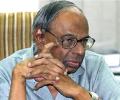
'It appears the growth rate could be around six per cent'.
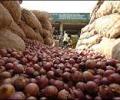
Rangarajan, who was answering questions on onion prices touching Rs 100 per kg in some cities, said the impact on inflation would not last long.

The Prime Ministry's Economic Advisory Council Chairman also said fiscal deficit is a concern too and suggested raising domestic oil prices to restrict it to the budget target of 4.8 per cent of the gross domestic product in this fiscal.
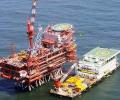
Last month, the government approved the proposal of doubling gas price from RIL's KG basin from $4.2 mmbtu to $8.4 mmbtu from April 1, 2014.
Budget has laid emphasis on increasing social spends

Since end-May there has been volatility in the foreign exchange market.

In an interview to Business Standard, Rangarajan says CAD will be brought under control at around two per cent of the gross domestic product.
C Rangarajan, chairman, Prime Minister's Economic Advisory Council tells Business Standard that the measures taken by the government will lead to economic growth of at least 6 per cent in FY14 against a decadal-low growth of 5 per cent in FY13.
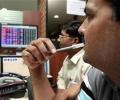
Indian markets may see some weakness in stocks post Fed hike.
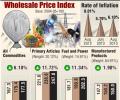
The price of vegetables in general rose by 77.81 per cent making life difficult for the common man.
.jpg)
The stock market responded to his speech by going up by over two per cent; the rupee also gained in strength, by about 1.45 per cent, against the dollar.
.jpg)
The marginal improvement in the index of industrial production was mainly on account of higher power generation and mining sector output, while manufacturing declined.
.jpg)
Raghuram Rajan, who took over as RBI Governor on September 4, is scheduled to unveil on Friday mid-quarter monetary policy review, an event keenly awaited by industry and banks.

'The real lifting of the economy will happen only if this momentum sustains in the coming months.'
.jpg)
The food inflation in July softened to 11.24 per cent from 11.84 per cent in the previous month, according to the official data released on Monday.
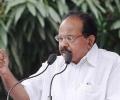
The new rates, which are likely to be at $8-8.4 against the current price of $4.2 per million British thermal unit, are based on the recommendations of a committee that was appointed by Prime Minister Manmohan Singh at the request of Moily's predecessor, S Jaipal Reddy.
 © 2026 Rediff.com - Advertise with us - Disclaimer - Privacy Policy - Sitemap - Feedback - About us - Terms of use - Grievances